Overall I’m happy with the animation, I would of liked it to be a bit more detailed and a bit longer but I put as much effort in as I could.
What went well with this project is creating the scenes. Photoshop is probably my strongest point within in media, I find it easy to use and I’m able to use all tools comfortable within the software. Throughout this project the scenes took the longest to create which made it a struggle to complete the animation to something I was completely happy with. For me I would of preferred to spend the most time actually animating the scenes rather than creating them to give me the best chance of creating a animation that worked well together and I was to be completely happy with.
What didn’t go well within the project was the animating. After Effects isn’t my strongest point in media and I’m not the best animator, so therefore it was a struggle to produce the best animation.
What I would improve on for future preferences is I would learn more skills within After Effects so I am comfortable using all tools within the software to the best of my ability. Maybe animation wasn’t the best choice for me to do but I wanted to give myself a challenge and test myself to see what my strengths are within different adobe software.
Evaluation
From my peers reviewing my animation they told me that it does all work well together but it could be a bit smoother. The animation seems to be slower than it should be and could be slightly faster to make it a bit more exciting. Also there could of been a bit more animation within the scenes to get a bit more out of the animation.
The scenes have been created very well and have a lot of detail in all scenes and each scene is easily understandable to know exactly what is going on. Furthermore they said the idea was very clever with putting my own interpretation on a childhood dream of becoming a footballer.
My whole animation is based around a young boy having a dream about becoming a professional footballer. Each scene goes through my interpretation of what a childhood dream of becoming a footballer would be like.
These designs are a couple of character ideas that I have sketched out to give me different ideas of what styles I could go for when developing my characters.
This is the storyboard that I based my animation around. Each scene I developed in PhotoShop and added more into every scene to give each scene a bit more detail.
A Little Boys Dream – This is a 2D animation that I am creating for my final major project. I chose to do an animation because I feel it is something I enjoy creating and is one of my strong points within media. I aim to make this animation about 2 minutes long, therefore it is not too short or it does not drag on which could cause the audience to dislike the animation.
The target audience for this is kids aged 8+, i’ve aimed it at this age because the story is all about being a young boy and dreaming about becoming a professional football and going through all stages to get there, starting off at your local football with hope to be noticed by a scout and join a professional football team. Unfortunately for the young boy it turns out to be just a dream and wakes up to his alarm.
There are only a few characters in this animation, the main character, who is the young boy dreaming about becoming a footballer, the goalkeeper that the boy scores against when playing for his local side, the crowd that is in support for the boys local side and when at the stadium and the scout that notices how well the boy is playing.
Not every scene will have a lot of animation, for example the first and last scene. These scenes will just be the boy in bed at the start and at the end when the boy is in bed again and his alarm goes off. The main focal point of this animation will be the scenes in the middle of the animation where most of the characters will be animated and moving around the scene.
For this animation I want to create a smooth background track that will play over the animation. The software I want to use to create this is GarageBand. I want to use this because it is a software that I am familiar with and have used in the past. I feel that it is a useful software to just create a short background song.
I have chosen this idea because I created a animation last year that was based around Warburton’s and for me it went really well, therefore I wanted to create another animation for my final major project.
For my research, I have looked at various different animation and the different types of animation that I could do. I got my idea from another animation that I saw on youtube and wanted to create my own interpretation of what a childhood dream of becoming a footballer is like.
There were many different types of animation that was used before film. With the spread of the Industrial Revolution in Europe and North America in the 18th and 19th centuries came experimentation with machines that would make images appear to move.
1603,
The magic lantern first appeared and the magic lantern is an image projector using pictures on sheets of glass. Since some sheets contain moving parts, it is considered the first example of projected animation.
1824,
The Thaumatrope was introduced and it is a rotating mechanism that has different pictures on each side and when rotated you would combine both pictures (known as persistence of vision).
1831,
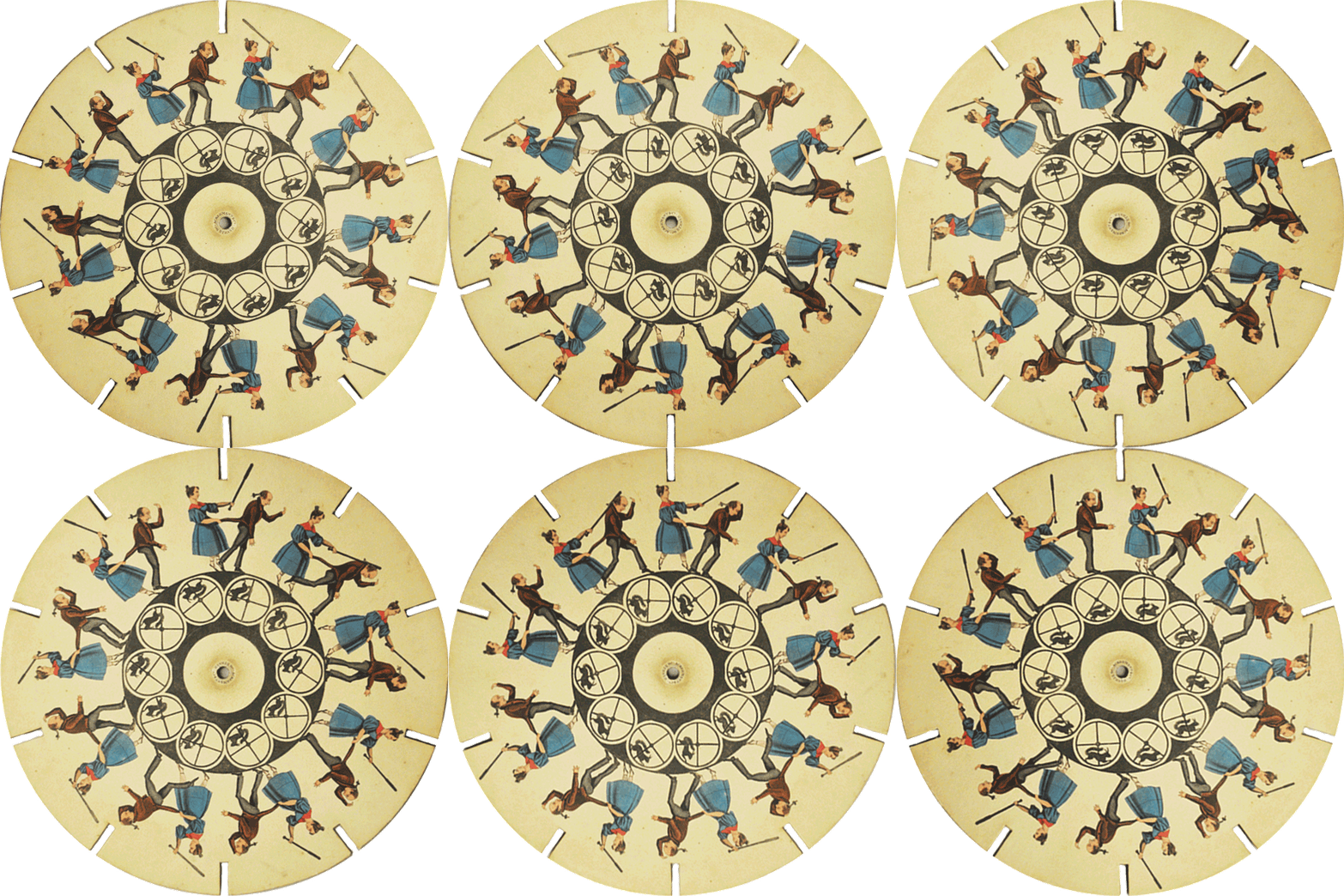
The phenakitoscope featured spinning disks reflected in mirrors that
made it seem like the pictures were moving.
1834,
After the phenakitoscope came the Zoetrope. The zoetrope was a hollow drum that housed images on long interchangeable strips that would spin and make the images appear to move.
1868,
The flip book was introduced. The flip-book, also known as the kineograph, reached a wide audience and is credited with inspiring early animators more than the machines developed in this era. The flip book is a small drawing pad with small images created on each page and then using your thumb at a rapid pace flicking through each page creating a short animation of all the images.
1827,
The praxinoscope expanded on the zoetrope, using multiple wheels to rotate images. It is considered to have shown the first prototypes of the animated cartoon.
1914,
GERTIE THE DINOSAUR
The animation of Gertie The Dinosaur was created and this character was to be considered as the first cartoon to feature an appealing character.
1919,
FELIX THE CAT
Felix The Cat was created by Musical Mews and Feline Follies. Felix the Cat – often considered the first animated movie star. Felix The Cat was created during what is known as the ‘Silent Era’, a period during 1900’s and 1930’s.
Silent era,
STEAMBOAT WILLIE
‘Steamboat Willie’ an iconic animation still remembered today created by Walt Disney. Featuring Mickey Mouse it becomes the first cartoon with the sound printed on the film, and is the first notable success for Walt Disney Studios, founded in Los Angeles in 1923.
1930’s,
THE GOLDEN AGE
Next came what was known as ‘The Golden Age of American Animation’, this was a period that started in 1930 and finished during the 1950’s. During what many consider to be the “Golden Age” of animation, theatrical cartoons became an integral part of popular culture. These years are defined by the rise of Walt Disney (Mickey Mouse, Donald Duck, and Silly Symphonies), Warner Brothers, MGM, and Fleischer (Betty Boop, Popeye).
1937,
SNOW WHITE
Snow White was created by Walt Disney and it was the first animation to feature hand drawn animation. When creating the seven dwarfs it took up to almost two years to come up with the final rendering for all seven dwarfs, using 1.5 million cells throughout the animation.
1960’s,
AMERICAN TELEVISION ERA
Became know as the American Television Era and one of the first animated television shows was the Flintstones, Hanna-Barbera releases The Flintstones in 1960, the first animated series on prime-time television.
1961,
YOGI BEAR
The introduction of yogi bear, The Yogi Bear Show, a spin-off of Huckleberry Hound
(another Hanna-Barbera production), debuts on national TV.
ACADEMY AWARD WINNER
Best Short Film
1964
THE PINK PHINK
DePatie-Freleng Enterprises wins the Academy Award for Best Short Film
for The PinkPhink (of the Pink Panther series) and continues to
create shorts for theatrical release.
1964
FRITZ THE CAT
Fritz the Cat is released—the first animated
adult (X-rated) feature film.
1980 – 2014
MODERN AMERICAN ERA
The CGI (computer generated imagery) revolutionized animation. A principal difference of CGI animation compared to traditional animation is that drawing is replaced by 3D modeling, almost like a virtual version of stop-motion. A form of animation that combines the two and uses 2D computer drawing can be considered computer aided animation.
1984
THE ADVENTURES OF ANDRE & WALLY B
This short film was the first fully CGI-animated film,
created by The Graphics Group, the precursor to Pixar.
1987
THE SIMPSONS
The Simpsons is an American adult animated sitcom created by Matt Groening for the Fox Broadcasting Company. It is the longest-running American sitcom, the longest-running American animated program, and in 2009 it surpassed Gunsmoke as the longest-running American scripted primetime television series. Longest running american animated program.
1995
TOY STORY
Toy Story, the first fully computer-animated
feature film, was released. Taking place in a world where toys pretend to be lifeless whenever humans are present, the film’s plot focuses on the relationship between Woody, an old-fashioned Cowboy (voiced by Tom Hanks), and Buzz Lightyear, an astronaut figure (voiced by Tim Allen)
2014
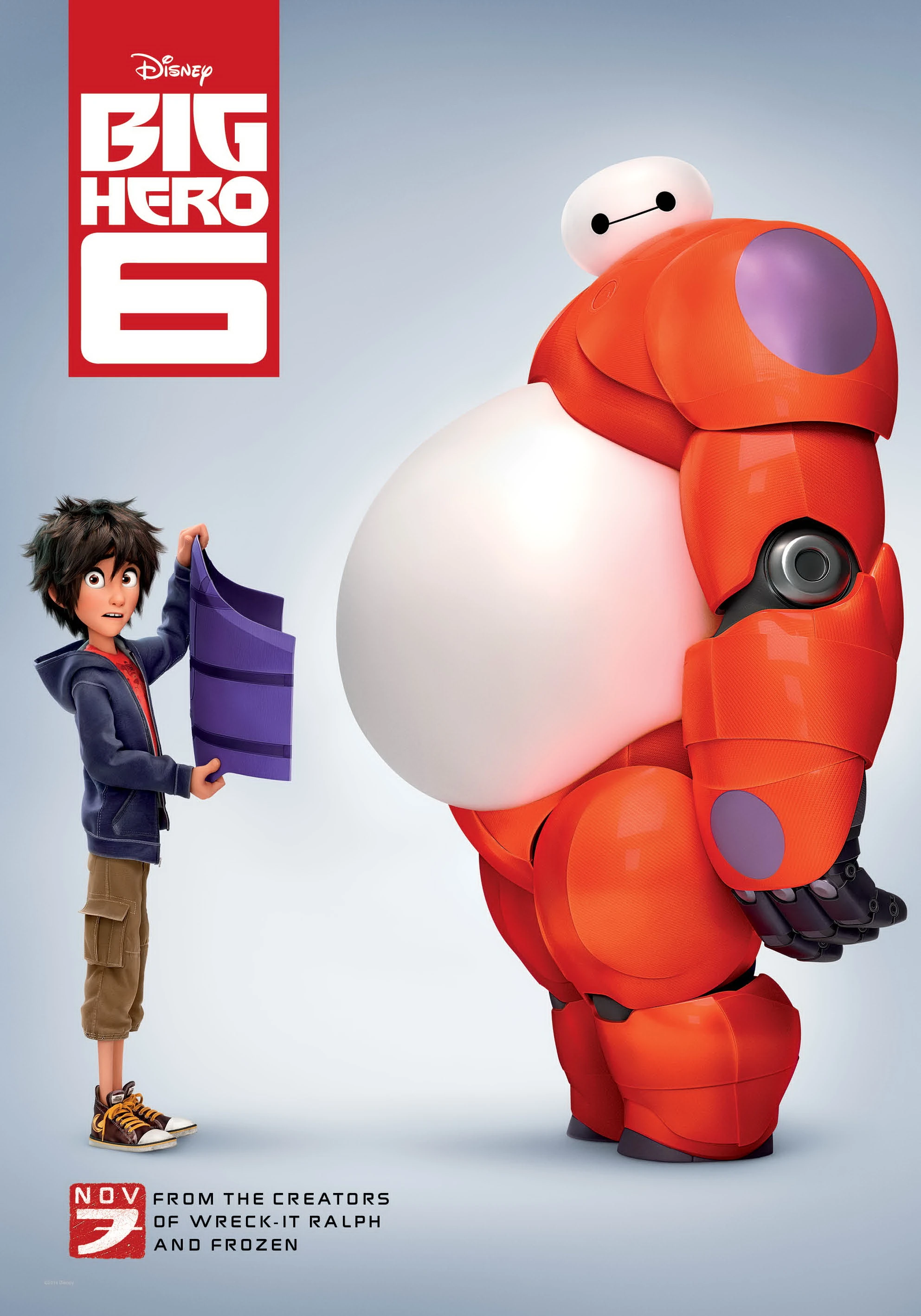
BIG HERO 6
Big Hero 6 is the first Disney animated film
to feature Marvel Comics characters.
To begin with my logo designs, I created some sketches to get different ideas of what I could use when developing the final idea.
Logo Designs
These images shown above are all used within my logo designs. They are all used within the background of the logos that I have edited in photoshop by the polygonal lasso tool to cut out sections of the background that I don’t want.
Title IdeasFinal Ideas
These are the final ideas I decided to choose from by combining the logo and title ideas together.
Liam Gallacher:
LOGO DEVELOPMENT
To begin my logo design I first had to research a variety of logos and concept designs, the research is (Seen bellow)
VIRTUAL REALITY LOGO DESIGN RESEARCH
To an extent, we could suggest that video gaming is a form of virtual reality, based on the Wikipedia definition of VR (seen bellow) is the definition.
The definition states that VR is a simulation of an environment that can be interacted with in a seemingly real or physical way. To begin my logo design process I first had to research different logo designs and VR concepts. (seen Bellow) is mood boards with my visual research.I looked at a variety of virtual reality logos, masks and augmented reality designs which have been implemented into official concepts. I looked at Blacklight retribution’s helmet designs. (Seen in ) bellow are some of the Blacklight Retribution helmet designs across the center of the mood board, I felt it was relevant to my initial logo designs as the masks had a Hyper-reality visor (HRV) installed into all of them whereby in the actual game it allowed the player to see through walls. I felt this was an innovative virtual reality system that was implemented into a game concept and represented initial video game virtual reality logos well.
I suggest this was an innovative virtual reality system that was implemented into a game concept and represented initial video game virtual reality logos well. I also looked at the virtual reality chairs used in the Matrix (seen in ) although this didn’t have any mask designs I still believe that the concept was still worth looking at. The Assassins Creed Animus table was also another good concept that I looked at, in () in the top right we can see the virtual reality attachment which connects to the user’s head which pulls the user into the world, I thought the simplistic design was impressive and chose to implement the simplistic form into my final design.
I also looked at the Terminator cyborg robots. The skeleton chrome faces provided a good design aspect, however, the infrared glowing eyes really drew me into their design and enticed me to experiment with this feature within my actual design.
seen bellow in () is the idea, inspired by the Terminator design. I chose to use the blue colour instead of Red for the eyes as I felt blue represented virtual reality rather than red which just represents danger or a protagonist. Blue looked more cyborg-like similar to the iRobot blue tint in their bodies (Seen bellow) in (). Back to () I Discarded this blue tint eye feature as the eyes didn’t suggest simplicity – The glare in the eyes had to have soft edges to make the laser eyes look realistic which didn’t fit in with the hard-edged geometric shaped logo design. () concept, was later discarded because of this.
I started lookiing at the Killzone’s Helghast soldier Mask which was one of the main influences that lead to the final designs of my logos. seen bellow in () we can see the Helghast masks in the mood board. Also seen in the moodboard is tiki-tiki masks, I chose to use this idea as tiki-tiki masks are associated with jungles and amazons which is saturated by brightly coloured animals and plants which masks the idea of an Arcadia, our working title which also means a paradise. Our game concept is set in a virtual eden that the main character dwells into, so the tiki-tiki mask represented this backstory well, it also fit in well with the gaming concept as we see in the mood board Aku Aku from 1996 Crash bandicoot video game.
Sketches were produced based on all the mask concept research done so far (Seen bellow)
(Seen above) was the original mask logo designs
moving on from the original mask concepts, seen above is the latter concept art, which is the design of the city. I have planned on having a billboard of some sort – a plaque or just some typography written in the forground of the city stating “ARCADIA” (Seen Bellow) are two different types of typefaces that I aimed at placing in the foreground over the city design.
(Seen bellow) I produced digital versions of the sketches
I also experimented with a typography style logo (Seen Bellow) but stayed with the mask logo’s as I had more research regarding mask’s and I believed the mask designs were more aesthetically pleasing.
My last and chosen logo design (Seen Bellow)
I began the logo design by producing the initial sketches, I then created the mood board seen above to help me design the logo.
Our VR story starts of with a character called John, John is in a old building as part of a group of people testing out a new game. The first scene starts with the camera focused on the door, John then walks into the room and sits down on a chair. Moments later another man walks into the room dressed in a lab coat and places the box in front of John on a table. Just after the box is placed on the table John asks “Wheres the rest of the test group” when the scientist quickly replies “You are the test group” then walks out the room leaving John in there alone with the VR goggles. There is a voice over the top of the room coming from a speaker, it’s the scientist that walked in, he says “John, please could you put on the headset,” John looks at the headset nervously and continues to out the headset on. As soon as the headset is on he is sent into another world of virtual reality, John looks around and explores the world that he is in, John then takes the headset of. The scientist speaks again “How do you feel John”, John sits there in excitement, then he just smiles.
Treatment:
The working title is VR through space. This short promo will be an advert about one man testing the new VR headset and entering a world of space to explore for himself, this is a very short film as the promo is mainly about advertising a certain new product that is coming out in the future. The overall target audience would be towards teens and adults as it is a VR game that you have to have a lot of knowledge about space, furthermore when doing research it is most profound that teenagers and young adults are most likely to purchase a VR headset. The main character is a nervous man going to a test group and testing the latest new product. The main character is very un-easy about everything that is going on, but when he experiences VR for the first time it turns him into a whole new person, full of life showing how fun virtual reality is. The first set of scenes are in a room when the character experiences what virtual reality is really like. When producing this promo the equipment that we will need is; lighting, camera, sound and the VR headset as a prop and maybe a lab coat for the scientist, the shot set will be when the man opens the door and goes in the camera will be looking at the door coming from the out side going in, then the camera will be in the room. The next set of scenes will be entirely in front of a green scene as the character is in a virtual reality world. We will need to get lighting, a camera, sound (boom mic) that will cover those shots. For audio in the VR world there maybe some themed background music but 100% there will be ambient noise such as a breeze and birds chirping to produce the natural feel of the outside. I feel this is a good idea for the project as it shows a man becoming happy again and that from the experience it gave him happiness. Therefore, I feel that this trailer will keep the audience watching because of its a strange nature and the interest to find out what is going on will happen, to make our environment we will use maya to create the virtual reality world. We will most likely finish the 3D work when we get to post production. The only thing we may have to buy would be the lab coat the scientist wears as the equipment like the camera sound and the VR headset we can book out from the college.
Roles:
Elliott – Pre Concept Artist, Sound, Lighting during production
Liam – Sound, Pre Concept Artist
Alex – 3D Animation, Director, Script, Actor
Rokas – 3D Animation, Cameraman
Josh – Research, Actor, Pre Concept
The assignment began week starting 20th February –
Monday 20th February- Research : Concept of AR/VR –
Produce a historical timeline of AR/VR in fiction and visual media.
Tuesday 21th February- Research : Game Concept –
Devise a game concept and from this chose which story mechanism your promo will follow – investigate a range of media where VR/AR is use.
Wednesday 22nd February- Research : Treatment & Visual Identity –
Produce a story idea in the form of a Treatment and story development
Research your ideas for a visual identity, look at visual references for scenes, props and characters.
Thursday 23rd – Sunday 26th- Research : Finish any remaining research tasks and go over research tasks completed to make sure they are to good standard.
Monday 27th February- Asset Production : Generate Ideas-
Generate drawings, images, photos, and found materials of ALL the assets you intend to use in your promo. This will include scene, character and props that will appear in your production.
Tuesday 28th February- Asset Production : Graphics
Consider graphics and titling to be used in your promo, collect examples of font and designs for logos.
Wednesday 1st March- Asset Production : Gathering Assets
Produce scans, animations, live footage, 2D/3D and stop-motion animation, gameplay and collect internet and copyright free material of the assets that you will use in your promo.
Thursday 2nd March – Sunday 5th March- Asset Production : Soundtrack
Generate a soundtrack and sound effects using Garageband, Audition, live instruments, etc. If using spoken word produce a script and record this narration using industry standard techniques.
Monday 6th March – Prepare Files : Organisation
Organise and label files into the correct folder structures using industry techniques for naming conventions.
Tuesday 7th March – Prepare Files : Storage Device
Store these files onto the correct storage devices.
Wednesday 8th March – Prepare Files : Editing Visual Assets
Manipulate and edit the visual assets using background and motion effects (including chromakey techniques), filters, transitions and titling. Use After Effects and Premier Pro.
Thursday 9th March – Sunday 11th March – Prepare Files : Audio
Manipulate and edit the audio assets to fit the visual edit. Use Garageband, Audition, recorded narration (ADR) and Foley.
Monday 12th March – Prepare Files : Final Edit
Edit both Video and Audio assets to create a final edit, output these to the correct compression settings for: a) Youtube/Vimeo web streaming upload. b) In-game video.
Tuesday 13th March – Prepare Files : Final Promo
Upload the promo to the desired destination (YouTube and/or Vimeo)
Check for colour grading and studio quality and adjust values to suit purpose.
Feedback from a test screening
Until 27th March go over all work to make sure it is distinction level standard and make sure everyone in the group is happy with the final result and each of their inputs have been heard.
Virtual Reality or VR first dominated the scene in 2015/2016. First came the Oculus VR and this already had a foot in the gaming industry before Facebook took over the company for $2 billion, and then Sony came up with their own idea of 3D experiences by creating a project called Morpheus. Morpheus is a headset that immerses gamers into different elements of 3D experiences.
Before VR first started to dominate in 2015/2016, Sega’s Master System 3D glasses first appeared in the 80s, the Master System was a flickering headset that re-created the effect of 3D in a private setting. Although it is compared to today’s 3D standards, it created a unique effect across different 3D games, including the like of Space Harrier, Maze Hunter. Zaxxon 3D and Missile Defense.
At first, the headset didn’t sell as well as Sega had hoped, but the 3D trend came back when Sony introduced a more casual style with certain PlayStation 3 games, including Killzone 3, Sly Cooper: Thieves In Time and the Ico/Shadow of the Colossus Collection.
In 1995, Nintendo decided to give virtual gaming a try with its 3D red-and-black based headset, the Virtual Boy. After finding success in a rental campaign during the summer, the company launched it at retail for around $180. Several 3D games were introduced, including Teleroboxer, Red Alert and Mario’s Tennis, a brand that jumped to other consoles after its VR debut. It also introduced fans to the Wario Land series, which continues its success on the Virtual Console.
Not everyone was a big fan on the Virtual Boy, people found the feeling very queasy from the experience. The Virtual Boy introduced some good ideas before Nintendo discontinued it the following year. The aspect of 3D gaming would stick with the company, eventually returning with the release of the 3DS in 2011.
Virtual reality re-entered the gaming industry again when a company called Oculus VR developed a headset called the Oculus Rift. The device first got its start through a successful campaign, and soon after, Oculus began showing off the tech at trade events, where it was well received.
The Oculus rift has a very good amount of popular games that entices people entertain themselves with the Oculus rift game library, this is because it utilizes both original games and popular hits. Games such as Doom 3, Mirror’s Edge and Hawken were adapted to take advantage of the headset, and savvy developers created everything from an 8-bit Legend of Zelda game to the horror adventure Dreadhalls.
More importantly, it now has support. Facebook paid $2 billion for Oculus and its high-tech Rift gear, but it intends to let the company run on its own, meaning the the headset is still on tap for a consumer release a few months down the line. Still, with financial backing now in its corner and increased accessibility, Oculus now have the ability to find the audience they need and they want to make virtual reality very popular again.
Our VR gameplay starts of with this one man putting the VR headset onto his head and emerging into a world of 3D space. The character will then be able to explore the 3D space and get a view for what it is like without actually being there in reality. We chose to base our VR experience about space because it can be the most pleasing because in reality not many people get the chance to go to space and explore each planet.
The main equipment and software that we will be using to create this VR project will be Maya as our main software for the 3D environment and then using after effects and premier pro for editing. When filming the VR scene we will be using a high quality camera and and rode mic to make sure we capture every part of the scene we need to produce a VR scene to the best of our ability. Furthermore, we would need to make sure that we get all the correct equipment to produce the correct lighting for our VR experience, whether we make the scene a very dark scene, or whether we want to capture as much light as possible.
The target audience for this project would be based for people around the ages of 15+ just to make sure that this would be the correct age for people to view our content. The full trailer will fit into a 20 second limit and will be a half 3D animation as thats what we are using as the background environment.






 to cut out sections of the background that I don’t want.


 ) bellow are some of the Blacklight Retribution helmet designs across the center of the mood board, I felt it was relevant to my initial logo designs as the masks had a Hyper-reality visor (HRV) installed into all of them whereby in the actual game it allowed the player to see through walls. I felt this was an innovative virtual reality system that was implemented into a game concept and represented initial video game virtual reality logos well.

 ) although this didn’t have any mask designs I still believe that the concept was still worth looking at. The Assassins Creed Animus table was also another good concept that I looked at, in (


 ). Back to (
 ) concept, was later discarded because of this.


 ) we can see the Helghast masks in the mood board. Also seen in the moodboard is tiki-tiki masks, I chose to use this idea as tiki-tiki masks are associated with jungles and amazons which is saturated by brightly coloured animals and plants which masks the idea of an Arcadia, our working title which also means a paradise. Our game concept is set in a virtual eden that the main character dwells into, so the tiki-tiki mask represented this backstory well, it also fit in well with the gaming concept as we see in the mood board Aku Aku from 1996 Crash bandicoot video game.


